Muslim dating for marriage:
staying halal in the UK, US or Canada
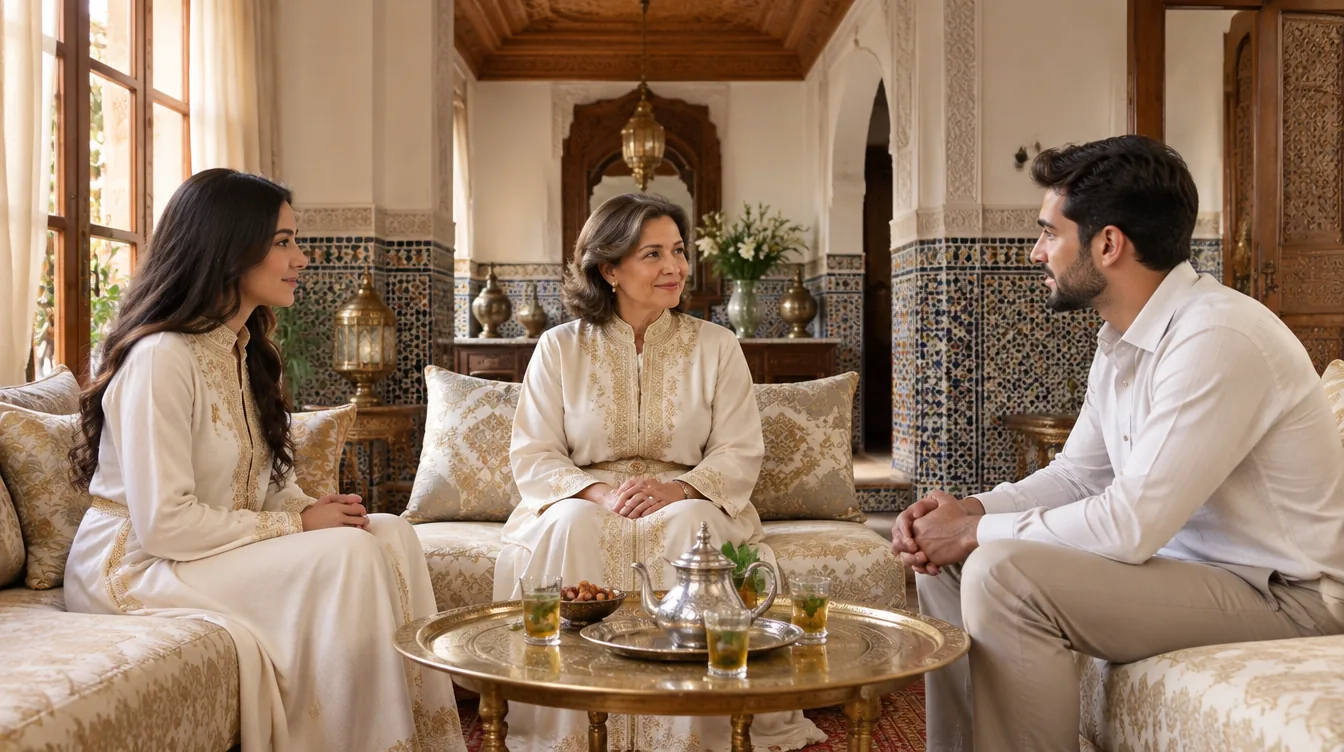
When you live in the West, looking for a future husband or wife without giving up your values is far from straightforward. Apps promise thousands of profiles, weddings and family gatherings are rarer, and you hesitate to involve relatives too early. Yet a Muslim introduction with a view to marriage can remain simple, dignified and calm, provided you choose the right setting. The figures cited here come from applications received by DAR TISLIT in France.
A Muslim introduction for marriage rests on three principles: a clear intention to marry from the start, respectful exchanges without isolation or ambiguity, and the involvement of family (and of the wali for the woman who wishes it) at the right time. In the West, apps make this framework hard to keep; an accompanied, confidential process centred on people who share the same values makes it easier.
What is a halal introduction with a view to marriage?
People often talk about “halal dating” without always defining it. In the minds of most Moroccan families, it is not a fixed rulebook but a way of doing things: meeting with the aim of marrying, not to “see where it goes”. That intention changes everything: it gives meaning to the conversations, protects each person's dignity and avoids becoming attached to someone with a different plan.
In practice, a serious Muslim introduction generally follows a few guidelines:
- The intention is stated from the first exchange: you are looking for a husband or wife, not a fling.
- Conversations stay modest: you talk about values, life plans, family and religious practice, without excessive familiarity.
- You avoid being alone together: first meetings take place in a public place or with a relative present.
- Family is involved once the plan becomes concrete, through to the proposal and the stages of a traditional wedding.
Everyone sets the dial according to their sensitivity and practice. What matters is that both people agree on this framework, and that is precisely where many meetings fail.
Looking for a serious person who shares your values? DAR TISLIT will open soon in your country.
Join the waiting list →Why Muslim dating sites often disappoint
Muslim dating sites and apps have the merit of existing: they offer a first religious filter and give visibility to those who no longer have a network. But many singles we interview describe the same weariness.
Intentions that cannot be verified
Anyone can tick “practising” or “looking for marriage”. Without a prior human conversation, it takes weeks of chatting to understand whether the other person is really ready to commit, and sometimes to discover they were not.
A setting that encourages ambiguity
Private messages at any hour, conversations with several people in parallel, photos in circulation: everything that makes an app work runs against the modesty and discretion most Moroccan families look for.
The most serious profiles drift away
Many women who sincerely want to marry have left these platforms after bad experiences. The result: committed profiles are under-represented. We set out these differences in our comparison, matchmaking agency or dating app.
Seeking what is halal is not only avoiding what is forbidden: it is choosing a path that respects the other person as much as yourself.
The place of faith among Moroccan singles
You sometimes hear that young Moroccans in Europe drift from religion when it comes to marriage. The applications received by DAR TISLIT in France say rather the opposite. Across more than 1,200 profiles studied, faith remains one of the very first criteria, for women and men alike.
Of 673 women's applications, 84% of women name faith among the three most important elements for a successful marriage, far ahead of financial security (27.9%). Among men, 74.3% say they pray regularly (191 responses) and 84.1% do not drink alcohol (195 responses). Asked about their most important criteria in a future wife, 37.5% of men spontaneously mention faith, practice or values (192 responses).
In other words, the great majority of singles who write to us are not looking for “someone Muslim” in the broad sense: they are looking for someone whose practice is compatible with theirs. That is an essential nuance, also found in how Moroccan women really choose a partner. Two very devout people may not live their faith in the same way, and that is often where misunderstandings begin.
Be among the first to know when DAR TISLIT opens in your country.
Notify me when it opens →The role of family and the wali in the process
In the Muslim tradition, and particularly in the Maliki school followed in Morocco, the family is not a spectator of the marriage. The wali, the woman's marriage guardian (often her father, a brother or an uncle), traditionally plays a role of protection and advice. The Moroccan Family Code today allows an adult woman to conclude her own marriage or delegate this step to her wali: for specific legal questions, it is better to ask the consulate or an adoul.
Beyond the law, the presence of family brings something precious: an outside, caring view on a decision that commits an entire life. Yet many singles in the diaspora hesitate to involve their parents too early, for fear of pressure or disappointment.
When should you involve relatives?
- At the start, talking to a trusted relative (a mother, sister or brother) helps you keep a clear head.
- When the understanding is confirmed, a meeting with the family lets you check that visions of the home match.
- Before any commitment, the formal proposal and exchanges between families set the framework, including on concrete matters such as who pays for what at the wedding.
There is no single timetable: what matters is that everyone knows from the start that family will have its place.
A serious Muslim introduction, accompanied and discreet
DAR TISLIT is a matrimonial agency for people of Moroccan origin (Chleuh, Amazigh or Moroccan in the broad sense). Our way of working was designed to stay faithful to our applicants' values:
- An individual interview before any introduction, where religious practice, family and plans for the home are discussed openly.
- No public profile: nobody swipes through your photo, nothing is shared without your agreement.
- Targeted introductions, between people whose intention to marry and view of religion are compatible.
- A pace that is yours, with the possibility of involving your family when you see fit.
This process matches female applicants' expectations: 79.1% want to marry within twelve months (28.2% “as soon as possible”, 50.9% “within 6 to 12 months”, of 680 responses). They do not want to lose any more time, and they want the path to be clean.
No agency can promise a meeting. But a clear, human setting that respects religion gives everyone the best chance of meeting the right person in the right way. The service is offered in France; a waitlist is open for the UK, the US and Canada.
A human, discreet and marriage-oriented approach: coming soon near you.
Join the waiting list →