Meeting Moroccan singles in the UK:
how to find someone serious about marriage
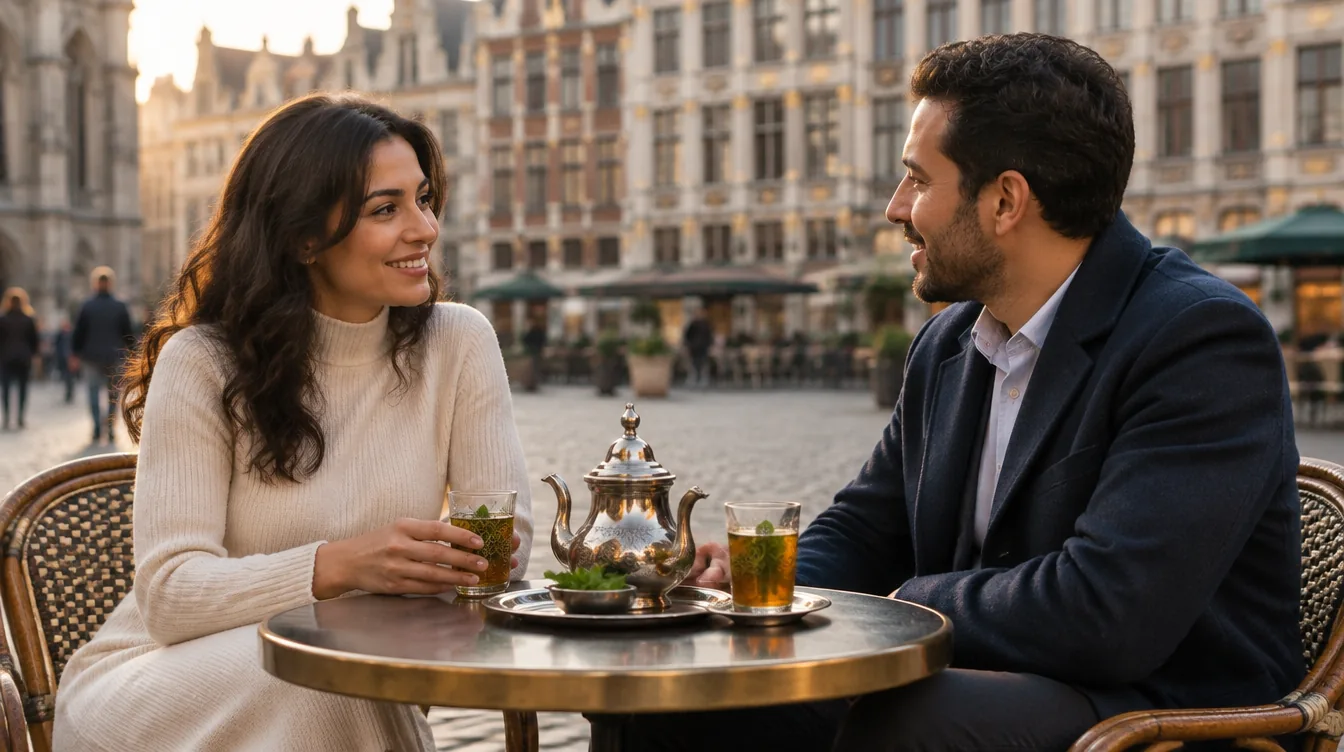
London, Birmingham, Manchester, Crawley, Glasgow: the Moroccan community in the UK is smaller than in France or Belgium, but it is well rooted, especially in London. And yet many single people of Moroccan heritage who want to marry tell us the same thing: « everyone knows of everyone, but nobody really meets ». Between the discretion of a close-knit community, busy working lives, social circles that no longer overlap and apps that disappoint, finding someone serious calls for a different approach. Here is what we see, backed by data.
To meet a serious Moroccan partner in the UK with marriage in mind, what works best is a trusted circle and a confidential, human matchmaking service that checks both people really intend to marry. The singles who apply to us are very open: almost 8 in 10 women accept a spouse of any Moroccan background. The key is to be clear from the start about timing, where you will live and the place of faith at home.
DAR TISLIT will soon open in English-speaking countries. Join the waiting list to be among the first to hear.
Join the waiting list →Meeting Moroccan singles in the UK: why it is hard despite an established community
In a community where families know each other through the mosque, local shops or Eid gatherings, being seen to be « looking » is not easy. Asking for help means risking that the news travels around before the first conversation has even happened. Many people prefer to say nothing, and the years go by.
Then there is the reality of life in Britain: long commutes, demanding jobs, friends who are already married, and a community spread thinly across the country. A Moroccan single in Manchester and another in South London may share the same values and life plans without ever crossing paths. The « natural » occasions of the past (family weddings, visits, summers in Morocco) still exist, but they no longer create a meeting between two people who both know they are looking for marriage.
Second- and third-generation British Moroccans also often grew up between cultures, with English as their first language and darija or Tamazight at home. Finding someone who understands both worlds is a real part of the challenge.
A close community protects you, but it can also make the search silent. A confidential setting lets you look without being exposed.
What single people of Moroccan heritage want (DAR TISLIT study)
DAR TISLIT has received more than 1,200 applications from people of Moroccan heritage. These applications were received in France (and Belgium): our figures are not UK statistics, but they reflect well what the Moroccan diaspora that wants to marry is looking for. Three findings stand out.
Great openness about origin. According to our analysis of 691 forms completed by women who applied to DAR TISLIT in France, 79.5% are open to a spouse of any Moroccan background, and only 4.3% want a Chleuh (Amazigh) spouse only. For the vast majority, the region of origin in Morocco is no obstacle, as long as values match.
A serious, near-term plan. Of those 691 women, 79.3% plan to marry within a year (28.2% « as soon as possible » and 51.1% within 6 to 12 months). The median age is 37, for men and women alike: settled adults who know what they want.
Seriousness first. When we ask women what brought them to DAR TISLIT, almost one in four (23.9% of 689 answers) spontaneously mentions seriousness. They are not looking for more dates; they are looking for better introductions. The full portrait is in our study Moroccan Singles Looking for Marriage: Who Are They Really?
London, the Midlands, the North: widening your search without losing seriousness
Should you look only in your own city, or accept someone from another part of the UK, or even from Europe? In applications received in France, 48% of women prefer someone from their own region, while 26.1% answer « not necessarily » and 24.9% « any region » (690 answers). Among men, 33.5% want someone close to home only and 28.9% are open across their whole country (194 answers).
In the UK, where the Moroccan community is smaller and more scattered, widening your search is often the step that changes everything. Trains link London, Birmingham and Manchester in a couple of hours, and many families also have relatives in France, Spain or the Netherlands.
Questions to discuss early
- Who would move? Work, ageing parents and children from a previous relationship all weigh on the decision.
- Which language at home? English, darija, Tachelhit or Tarifit: a diaspora couple can mix several, which is a gift for future children.
- Where to live after the wedding? The UK, elsewhere in Europe or one day Morocco: your life plan matters as much as where you meet.
On how long to take between meeting and marriage, read How Long Should You Know Someone Before Marriage?
Want a serious introduction in the UK without compromising on your values? Be the first to know when DAR TISLIT opens.
Get notified when we open →Apps, family, matchmaking: what works in the UK
Family and friends remain the most natural route: an aunt, a friend or a trusted imam may suggest an introduction. But in the UK that circle is often small, and discretion is not always guaranteed.
Dating apps, including Muslim marriage apps, give access to many profiles. Their limit is well known: the intention to marry is rarely checked. We compare the options in Matchmaking Agency or Dating App.
A human, confidential matchmaking service answers exactly the diaspora's difficulty: searching without being seen. At DAR TISLIT, every application is read by a person, every applicant has an interview, and no profile is ever published. An introduction only happens when both plans match (faith, timing, where to live…), and always with both people's agreement. The service is for people of Moroccan heritage who want to marry. See also Where to Find a Serious Moroccan Matchmaking Agency.
Getting married in the UK: the main steps
Once you have found the right person and the families agree, a wedding for a couple of Moroccan heritage in the UK usually has three stages. The exact steps depend on your situation (nationality, immigration status, previous marriage) and on the nation of the UK where you live: always check with your local register office and with the Moroccan consulate that serves you.
- The civil marriage. In England and Wales, you give notice at your local register office some weeks before the ceremony, with the documents requested; Scotland and Northern Ireland have their own procedures.
- Recognition in Morocco. For Moroccans who marry under the law of their country of residence, the Moroccan Family Code (article 15) requires a copy of the marriage certificate to be lodged with the consular services within three months. The consulate will tell you which documents are needed.
- The celebration and traditions. Proposal, henna night, the evening with the amariya: every family blends its traditions, often between the UK and Morocco. We describe them in The Stages of a Traditional Moroccan Wedding Abroad.
To prepare your file, our guide Marrying a Moroccan Spouse in the UK goes through the documents most often requested.
A guided, confidential approach
What we see every week is that the problem is almost never a lack of serious people. They exist, in London as much as in Birmingham or Manchester. The problem is that they cannot see each other. A discreet setting, where you know the other person is also looking for marriage, makes all the difference.
DAR TISLIT is preparing to open in English-speaking countries. If you are of Moroccan heritage and your plan to marry is sincere, join the waiting list and you will be among the first to hear.
A serious introduction starts with a setting you can trust. Be among the first when DAR TISLIT opens in the UK.
Join the waiting list →